 https://www.getfulltextresearch.com/wp-content/uploads/2026/10/Bioscientfica.png
500
800
Tracy Gardner
https://www.getfulltextresearch.com/wp-content/uploads/2023/01/getftr-colour-B.svg
Tracy Gardner2026-10-14 18:12:502026-10-14 18:12:50Press Release: Bioscientifica Partners with GetFTR
https://www.getfulltextresearch.com/wp-content/uploads/2026/10/Bioscientfica.png
500
800
Tracy Gardner
https://www.getfulltextresearch.com/wp-content/uploads/2023/01/getftr-colour-B.svg
Tracy Gardner2026-10-14 18:12:502026-10-14 18:12:50Press Release: Bioscientifica Partners with GetFTR
If Content Can Be Read Anywhere, How Do Publishers Measure Its Impact?
The scholarly communications landscape is becoming increasingly fragmented. Researchers no longer discover and access scholarly content solely on publisher platforms. Instead they move between discovery services, aggregators, library resources, syndication platforms, research tools and increasingly AI-powered environments.
This creates opportunities to extend the reach and visibility of scholarly content but it also raises an important question: how do publishers understand usage and impact when content is being consumed beyond their own platform?
The Growing Visibility Gap
For many years, librarians have relied on publishers providing usage data gathered directly from their publishing platforms to understand how content they license is being used. COUNTER reporting has provided a trusted and consistent framework for measuring that activity.
However, as full-text content syndication via platforms such as ResearchGate and the ScienceDirect syndication initiative becomes more common, publishers can lose visibility into how often their content is being consumed on other platforms.
The content is being read, but the usage data may not always find its way back to the original publisher, and this creates challenges for everyone involved.
Tasha Mellins-Cohen, Executive Director of COUNTER Metrics, says
“Between the expansion of highly distributed open access content, and the advent of AI, the community can’t continue to rely on usage metrics that only reflect activity on one publisher platform. We need to understand how publisher content is used on syndication, aggregation and other discovery sites, and basing that understanding on the COUNTER standard allows publishers and libraries to make valid comparisons of usage patterns.”
By implementing COUNTER’s best practice on syndicated usage, publishers receive a complete picture of engagement with their content, and libraries gain reliable evidence of the value they receive from subscriptions.
Bridging the gap: How GetFTR supports COUNTER
The solution is to collect data in a way that is trusted, standardised and meaningful, which is why COUNTER remains so important. As the scholarly ecosystem evolves, the community needs ways to ensure that usage can be measured consistently, regardless of where content is accessed. If content is to be consumed across multiple platforms, usage reporting must evolve to reflect that reality.
This challenge led GetFTR to explore how it could support COUNTER-compliant reporting for syndicated content. GetFTR is a free-to-use, publisher-supported service that already sits within the entitlement workflow, enabling discovery and research tools and other services to check directly with publishers and aggregators whether a researcher has access to published content.
By extending this workflow, publishers can include their internal customer identifier within the GetFTR entitlement check response. This is the mechanism that makes everything else possible: when content is subsequently accessed on a syndication platform, that identifier enables usage to be reported back to the publisher. The publisher can then aggregate on-platform and off-platform usage at the institutional level, creating a more complete view of engagement across the board.
Dianne Benham, Product Director, GetFTR said
“The GetFTR infrastructure already connects syndicating publishers with syndication platforms and other discovery tools to provide entitlement checks, so it’s well placed to tackle other industry challenges such as research integrity, displaying licences, perpetual rights, linking preprint to version of record, and now supporting off platform usage”
Importantly, this isn’t about creating a whole new reporting framework. It builds on workflows and standards that already exist within the community.
A Collaborative Approach
The first implementation of this approach has been explored through collaboration between ScienceDirect, Atypon and GetFTR as part of a content syndication initiative. While the technical details may vary, the principle is straightforward: enabling trusted usage reporting wherever content is consumed.
Olly Rickard, Senior Product Manager at Atypon said
“Projects like this demonstrate what deep industry collaboration can achieve: identifying an elegant solution that builds on existing infrastructure and then delivering it. Working closely with partners across the industry to advance scholarly publishing infrastructure continues to be a key driver for us at Atypon.”
This benefits publishers who want to fully understand how their content is performing and libraries looking for evidence of value.
Ian Campsall, Senior Product Manager for ScienceDirect said
“GetFTR has become the industry standard for entitlement checks across research publishing platforms which is a clear indicator of the value it delivers. GetFTR enables ScienceDirect to verify entitlements directly with publishers that syndicate content. By including publisher customer IDs in GetFTR responses, ScienceDirect can now deliver COUNTER-compliant usage data in a format that makes it easy for publishers to aggregate on- and off-platform usage.”
Content syndication is a growing part of publisher strategies, but compiling and assessing total usage can remain challenging for both publishers and libraries.
“It’s exciting that GetFTR is able to provide the technical infrastructure to help solve this pressing issue. We are happy to support our partners in streamlining workflow and improving the efficiency of data collection.” Heather Staines, Outreach Manager for GetFTR and former Board Member for COUNTER.
Looking Ahead
Content will continue to move beyond traditional publisher platforms, syndication initiatives will likely grow and Discovery pathways will continue to fragment.This is particularly true of new AI-led discovery routes, in which publishers will have even more need for reliable, normalised metrics of the kind that COUNTER is defining for syndicated agentic usage.
As this happens, the community needs to ensure that usage measurement keeps pace with the ecosystems. The challenge has moved beyond making sure content is wherever your researcher is and enabling streamlined access to content.
The question is no longer whether content can be consumed beyond the publisher platform because it already is. The challenge is ensuring that trusted, consistent usage measurement follows it wherever it goes.
https://www.getfulltextresearch.com/wp-content/uploads/2026/10/Bioscientfica.png
500
800
Tracy Gardner
https://www.getfulltextresearch.com/wp-content/uploads/2023/01/getftr-colour-B.svg
Tracy Gardner2026-10-14 18:12:502026-10-14 18:12:50Press Release: Bioscientifica Partners with GetFTR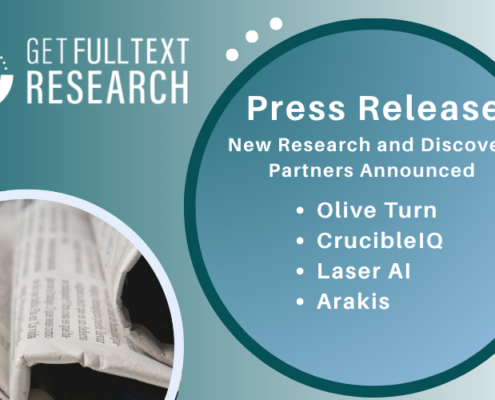 https://www.getfulltextresearch.com/wp-content/uploads/2026/10/New-integrators-October.png
500
800
Tracy Gardner
https://www.getfulltextresearch.com/wp-content/uploads/2023/01/getftr-colour-B.svg
Tracy Gardner2026-10-13 13:52:322026-10-22 14:09:42Press Release: GetFTR announces four new integrations
https://www.getfulltextresearch.com/wp-content/uploads/2026/10/New-integrators-October.png
500
800
Tracy Gardner
https://www.getfulltextresearch.com/wp-content/uploads/2023/01/getftr-colour-B.svg
Tracy Gardner2026-10-13 13:52:322026-10-22 14:09:42Press Release: GetFTR announces four new integrations https://www.getfulltextresearch.com/wp-content/uploads/2026/09/Emerald-usage.png
500
800
Tracy Gardner
https://www.getfulltextresearch.com/wp-content/uploads/2023/01/getftr-colour-B.svg
Tracy Gardner2026-09-17 12:43:512026-09-17 14:00:20Emerald measures 3.5% increase in usage with GetFTR
https://www.getfulltextresearch.com/wp-content/uploads/2026/09/Emerald-usage.png
500
800
Tracy Gardner
https://www.getfulltextresearch.com/wp-content/uploads/2023/01/getftr-colour-B.svg
Tracy Gardner2026-09-17 12:43:512026-09-17 14:00:20Emerald measures 3.5% increase in usage with GetFTR iStock
https://www.getfulltextresearch.com/wp-content/uploads/2026/09/Crossref-and-GetFTR-e1789120573156.jpg
499
800
Tracy Gardner
https://www.getfulltextresearch.com/wp-content/uploads/2023/01/getftr-colour-B.svg
Tracy Gardner2026-09-10 12:57:492026-09-11 11:55:43Metadata in Action: GetFTR and Crossref
iStock
https://www.getfulltextresearch.com/wp-content/uploads/2026/09/Crossref-and-GetFTR-e1789120573156.jpg
499
800
Tracy Gardner
https://www.getfulltextresearch.com/wp-content/uploads/2023/01/getftr-colour-B.svg
Tracy Gardner2026-09-10 12:57:492026-09-11 11:55:43Metadata in Action: GetFTR and Crossref iStock
https://www.getfulltextresearch.com/wp-content/uploads/2026/09/Scite-Case-StudyHow-Scite-integrated-GetFTR-to-enhance-research-discovery-and-full-text-access-3.png
500
800
Simon Hicks
https://www.getfulltextresearch.com/wp-content/uploads/2023/01/getftr-colour-B.svg
Simon Hicks2026-09-03 17:17:502026-09-17 12:58:33How Scite integrated GetFTR to enhance research discovery and full-text access
iStock
https://www.getfulltextresearch.com/wp-content/uploads/2026/09/Scite-Case-StudyHow-Scite-integrated-GetFTR-to-enhance-research-discovery-and-full-text-access-3.png
500
800
Simon Hicks
https://www.getfulltextresearch.com/wp-content/uploads/2023/01/getftr-colour-B.svg
Simon Hicks2026-09-03 17:17:502026-09-17 12:58:33How Scite integrated GetFTR to enhance research discovery and full-text access iStock
https://www.getfulltextresearch.com/wp-content/uploads/2026/07/iStock-2267168890-e1784211508516.jpg
500
800
Tracy Gardner
https://www.getfulltextresearch.com/wp-content/uploads/2023/01/getftr-colour-B.svg
Tracy Gardner2026-07-16 15:53:172026-07-17 15:02:36Why Publishers Should Join GetFTR
iStock
https://www.getfulltextresearch.com/wp-content/uploads/2026/07/iStock-2267168890-e1784211508516.jpg
500
800
Tracy Gardner
https://www.getfulltextresearch.com/wp-content/uploads/2023/01/getftr-colour-B.svg
Tracy Gardner2026-07-16 15:53:172026-07-17 15:02:36Why Publishers Should Join GetFTR https://www.getfulltextresearch.com/wp-content/uploads/2026/06/new-partners-PNAS.png
500
800
Tracy Gardner
https://www.getfulltextresearch.com/wp-content/uploads/2023/01/getftr-colour-B.svg
Tracy Gardner2026-06-16 12:00:392026-06-16 12:18:17Press Release: PNAS Partners with GetFTR to Improve Discovery and Access to Trusted Research
https://www.getfulltextresearch.com/wp-content/uploads/2026/06/new-partners-PNAS.png
500
800
Tracy Gardner
https://www.getfulltextresearch.com/wp-content/uploads/2023/01/getftr-colour-B.svg
Tracy Gardner2026-06-16 12:00:392026-06-16 12:18:17Press Release: PNAS Partners with GetFTR to Improve Discovery and Access to Trusted Research https://www.getfulltextresearch.com/wp-content/uploads/2026/05/new-partners-EBSCO.png
500
800
Tracy Gardner
https://www.getfulltextresearch.com/wp-content/uploads/2023/01/getftr-colour-B.svg
Tracy Gardner2026-05-11 14:25:542026-06-16 12:01:41Press Release: EBSCO Information Services and GetFTR Partner to Streamline Access to Full Text
https://www.getfulltextresearch.com/wp-content/uploads/2026/05/new-partners-EBSCO.png
500
800
Tracy Gardner
https://www.getfulltextresearch.com/wp-content/uploads/2023/01/getftr-colour-B.svg
Tracy Gardner2026-05-11 14:25:542026-06-16 12:01:41Press Release: EBSCO Information Services and GetFTR Partner to Streamline Access to Full Text https://www.getfulltextresearch.com/wp-content/uploads/2026/04/new-partners-ASHA-2.png
500
800
Tracy Gardner
https://www.getfulltextresearch.com/wp-content/uploads/2023/01/getftr-colour-B.svg
Tracy Gardner2026-04-30 15:30:432026-04-30 15:31:22Press Release: ASHA Journals Joins GetFTR
https://www.getfulltextresearch.com/wp-content/uploads/2026/04/new-partners-ASHA-2.png
500
800
Tracy Gardner
https://www.getfulltextresearch.com/wp-content/uploads/2023/01/getftr-colour-B.svg
Tracy Gardner2026-04-30 15:30:432026-04-30 15:31:22Press Release: ASHA Journals Joins GetFTR https://www.getfulltextresearch.com/wp-content/uploads/2026/04/new-partners-CoB.png
500
800
Tracy Gardner
https://www.getfulltextresearch.com/wp-content/uploads/2023/01/getftr-colour-B.svg
Tracy Gardner2026-04-20 14:05:052026-04-21 17:15:40Press Release: The Company of Biologists Joins GetFTR
https://www.getfulltextresearch.com/wp-content/uploads/2026/04/new-partners-CoB.png
500
800
Tracy Gardner
https://www.getfulltextresearch.com/wp-content/uploads/2023/01/getftr-colour-B.svg
Tracy Gardner2026-04-20 14:05:052026-04-21 17:15:40Press Release: The Company of Biologists Joins GetFTR iStock
https://www.getfulltextresearch.com/wp-content/uploads/2026/03/TF-Case-Study-e1773925174342.jpg
534
800
Tracy Gardner
https://www.getfulltextresearch.com/wp-content/uploads/2023/01/getftr-colour-B.svg
Tracy Gardner2026-03-19 13:24:052026-04-21 17:16:32How Taylor & Francis and GetFTR Enhance Research Integrity and Discovery
iStock
https://www.getfulltextresearch.com/wp-content/uploads/2026/03/TF-Case-Study-e1773925174342.jpg
534
800
Tracy Gardner
https://www.getfulltextresearch.com/wp-content/uploads/2023/01/getftr-colour-B.svg
Tracy Gardner2026-03-19 13:24:052026-04-21 17:16:32How Taylor & Francis and GetFTR Enhance Research Integrity and Discovery Freepix/Magnific
https://www.getfulltextresearch.com/wp-content/uploads/2026/03/AI-Brainstorming-scaled-e1773056833764.jpg
533
800
Tracy Gardner
https://www.getfulltextresearch.com/wp-content/uploads/2023/01/getftr-colour-B.svg
Tracy Gardner2026-03-09 14:51:332026-04-21 17:17:05How GetFTR Connects AI Sources to Trusted Content
Freepix/Magnific
https://www.getfulltextresearch.com/wp-content/uploads/2026/03/AI-Brainstorming-scaled-e1773056833764.jpg
533
800
Tracy Gardner
https://www.getfulltextresearch.com/wp-content/uploads/2023/01/getftr-colour-B.svg
Tracy Gardner2026-03-09 14:51:332026-04-21 17:17:05How GetFTR Connects AI Sources to Trusted Content https://www.getfulltextresearch.com/wp-content/uploads/2026/02/new-partners-feb-800-x-500-px-jan26.png
500
800
Tracy Gardner
https://www.getfulltextresearch.com/wp-content/uploads/2023/01/getftr-colour-B.svg
Tracy Gardner2026-02-11 15:16:482026-04-21 17:17:27GetFTR Announces New Partnerships
https://www.getfulltextresearch.com/wp-content/uploads/2026/02/new-partners-feb-800-x-500-px-jan26.png
500
800
Tracy Gardner
https://www.getfulltextresearch.com/wp-content/uploads/2023/01/getftr-colour-B.svg
Tracy Gardner2026-02-11 15:16:482026-04-21 17:17:27GetFTR Announces New Partnerships https://www.getfulltextresearch.com/wp-content/uploads/2026/01/Screenshot-2026-01-28-at-11.48.05-e1769600963602.png
537
800
Tracy Gardner
https://www.getfulltextresearch.com/wp-content/uploads/2023/01/getftr-colour-B.svg
Tracy Gardner2026-01-28 14:16:392026-04-21 17:18:03IOP Publishing and GetFTR – Strengthening Discovery & Integrity
https://www.getfulltextresearch.com/wp-content/uploads/2026/01/Screenshot-2026-01-28-at-11.48.05-e1769600963602.png
537
800
Tracy Gardner
https://www.getfulltextresearch.com/wp-content/uploads/2023/01/getftr-colour-B.svg
Tracy Gardner2026-01-28 14:16:392026-04-21 17:18:03IOP Publishing and GetFTR – Strengthening Discovery & Integrity https://www.getfulltextresearch.com/wp-content/uploads/2026/01/Press-Release-tile-800-x-500-px-jan26.png
500
800
Tracy Gardner
https://www.getfulltextresearch.com/wp-content/uploads/2023/01/getftr-colour-B.svg
Tracy Gardner2026-01-22 11:57:152026-04-21 17:18:28GetFTR Enables AI Tools to Check Access Rights for Academic Content
https://www.getfulltextresearch.com/wp-content/uploads/2026/01/Press-Release-tile-800-x-500-px-jan26.png
500
800
Tracy Gardner
https://www.getfulltextresearch.com/wp-content/uploads/2023/01/getftr-colour-B.svg
Tracy Gardner2026-01-22 11:57:152026-04-21 17:18:28GetFTR Enables AI Tools to Check Access Rights for Academic Content https://www.getfulltextresearch.com/wp-content/uploads/2025/12/product-update-BE.png
500
800
Tracy Gardner
https://www.getfulltextresearch.com/wp-content/uploads/2023/01/getftr-colour-B.svg
Tracy Gardner2025-12-10 14:52:432025-12-10 15:10:55Product Update: Enhancements to the GetFTR Browser Extension
https://www.getfulltextresearch.com/wp-content/uploads/2025/12/product-update-BE.png
500
800
Tracy Gardner
https://www.getfulltextresearch.com/wp-content/uploads/2023/01/getftr-colour-B.svg
Tracy Gardner2025-12-10 14:52:432025-12-10 15:10:55Product Update: Enhancements to the GetFTR Browser Extension https://www.getfulltextresearch.com/wp-content/uploads/2025/12/Part-Three-GetFTR-Insights-.png
500
800
Tracy Gardner
https://www.getfulltextresearch.com/wp-content/uploads/2023/01/getftr-colour-B.svg
Tracy Gardner2025-12-07 19:18:302026-04-21 17:19:13Insights Part Three: Collaboration and Innovation: How Publishers Prove Shared Infrastructure Works
https://www.getfulltextresearch.com/wp-content/uploads/2025/12/Part-Three-GetFTR-Insights-.png
500
800
Tracy Gardner
https://www.getfulltextresearch.com/wp-content/uploads/2023/01/getftr-colour-B.svg
Tracy Gardner2025-12-07 19:18:302026-04-21 17:19:13Insights Part Three: Collaboration and Innovation: How Publishers Prove Shared Infrastructure Works https://www.getfulltextresearch.com/wp-content/uploads/2025/11/zanitech-2.png
500
800
Tracy Gardner
https://www.getfulltextresearch.com/wp-content/uploads/2023/01/getftr-colour-B.svg
Tracy Gardner2025-11-26 16:39:342026-04-21 17:19:40How Zenitech Helped GetFTR Scale, Innovate, and Strengthen Research Integrity
https://www.getfulltextresearch.com/wp-content/uploads/2025/11/zanitech-2.png
500
800
Tracy Gardner
https://www.getfulltextresearch.com/wp-content/uploads/2023/01/getftr-colour-B.svg
Tracy Gardner2025-11-26 16:39:342026-04-21 17:19:40How Zenitech Helped GetFTR Scale, Innovate, and Strengthen Research Integrity https://www.getfulltextresearch.com/wp-content/uploads/2025/11/Part-Two-GetFTR-Insights-.png
500
800
Tracy Gardner
https://www.getfulltextresearch.com/wp-content/uploads/2023/01/getftr-colour-B.svg
Tracy Gardner2025-11-17 15:36:342026-04-21 17:20:03Insights from the GetFTR Founders, Part Two: Integrity, Trust & how GetFTR Strengthens the Scholarly Record
https://www.getfulltextresearch.com/wp-content/uploads/2025/11/Part-Two-GetFTR-Insights-.png
500
800
Tracy Gardner
https://www.getfulltextresearch.com/wp-content/uploads/2023/01/getftr-colour-B.svg
Tracy Gardner2025-11-17 15:36:342026-04-21 17:20:03Insights from the GetFTR Founders, Part Two: Integrity, Trust & how GetFTR Strengthens the Scholarly Record https://www.getfulltextresearch.com/wp-content/uploads/2025/10/Part-One-GetFTR-Insights-2.png
500
800
Tracy Gardner
https://www.getfulltextresearch.com/wp-content/uploads/2023/01/getftr-colour-B.svg
Tracy Gardner2025-10-24 11:58:512026-04-21 17:20:25Insights from the GetFTR Founders: Part One: safeguarding visibility and integrity of content
https://www.getfulltextresearch.com/wp-content/uploads/2025/10/Part-One-GetFTR-Insights-2.png
500
800
Tracy Gardner
https://www.getfulltextresearch.com/wp-content/uploads/2023/01/getftr-colour-B.svg
Tracy Gardner2025-10-24 11:58:512026-04-21 17:20:25Insights from the GetFTR Founders: Part One: safeguarding visibility and integrity of content https://www.getfulltextresearch.com/wp-content/uploads/2025/10/WoS-Announcement.png
500
800
Tracy Gardner
https://www.getfulltextresearch.com/wp-content/uploads/2023/01/getftr-colour-B.svg
Tracy Gardner2025-10-13 13:26:392026-04-21 17:20:56GetFTR and the Web of Science Partner to Streamline Research Discovery and Access
https://www.getfulltextresearch.com/wp-content/uploads/2025/10/WoS-Announcement.png
500
800
Tracy Gardner
https://www.getfulltextresearch.com/wp-content/uploads/2023/01/getftr-colour-B.svg
Tracy Gardner2025-10-13 13:26:392026-04-21 17:20:56GetFTR and the Web of Science Partner to Streamline Research Discovery and Access Freepik / Magnific
https://www.getfulltextresearch.com/wp-content/uploads/2025/09/business-concept-glass-world-laptop-scaled.jpg
1707
2560
Tracy Gardner
https://www.getfulltextresearch.com/wp-content/uploads/2023/01/getftr-colour-B.svg
Tracy Gardner2025-09-18 13:45:392026-10-15 14:42:51CABI and GetFTR – Enhancing Access and Impact Across the Global Research Community
Freepik / Magnific
https://www.getfulltextresearch.com/wp-content/uploads/2025/09/business-concept-glass-world-laptop-scaled.jpg
1707
2560
Tracy Gardner
https://www.getfulltextresearch.com/wp-content/uploads/2023/01/getftr-colour-B.svg
Tracy Gardner2025-09-18 13:45:392026-10-15 14:42:51CABI and GetFTR – Enhancing Access and Impact Across the Global Research Community https://www.getfulltextresearch.com/wp-content/uploads/2025/09/New-Integrations.png
500
800
Tracy Gardner
https://www.getfulltextresearch.com/wp-content/uploads/2023/01/getftr-colour-B.svg
Tracy Gardner2025-09-15 11:13:102025-09-15 16:01:25GetFTR Improves Research Access with New Discovery Integrations
https://www.getfulltextresearch.com/wp-content/uploads/2025/09/New-Integrations.png
500
800
Tracy Gardner
https://www.getfulltextresearch.com/wp-content/uploads/2023/01/getftr-colour-B.svg
Tracy Gardner2025-09-15 11:13:102025-09-15 16:01:25GetFTR Improves Research Access with New Discovery Integrations https://www.getfulltextresearch.com/wp-content/uploads/2025/09/product-update.png
500
800
Tracy Gardner
https://www.getfulltextresearch.com/wp-content/uploads/2023/01/getftr-colour-B.svg
Tracy Gardner2025-09-01 12:47:222025-09-01 13:44:57New features improve discovery and access to academic content
https://www.getfulltextresearch.com/wp-content/uploads/2025/09/product-update.png
500
800
Tracy Gardner
https://www.getfulltextresearch.com/wp-content/uploads/2023/01/getftr-colour-B.svg
Tracy Gardner2025-09-01 12:47:222025-09-01 13:44:57New features improve discovery and access to academic content Freepix/Magnific
https://www.getfulltextresearch.com/wp-content/uploads/2025/07/call-center-worker-using-ai-tech-laptop-reply-customers-closeup-scaled-e1753363404302.jpg
500
800
Tracy Gardner
https://www.getfulltextresearch.com/wp-content/uploads/2023/01/getftr-colour-B.svg
Tracy Gardner2025-07-24 14:38:092025-07-24 14:44:48AI Tools + GetFTR: Make the Research Pathway from Discovery to Access Smarter
Freepix/Magnific
https://www.getfulltextresearch.com/wp-content/uploads/2025/07/call-center-worker-using-ai-tech-laptop-reply-customers-closeup-scaled-e1753363404302.jpg
500
800
Tracy Gardner
https://www.getfulltextresearch.com/wp-content/uploads/2023/01/getftr-colour-B.svg
Tracy Gardner2025-07-24 14:38:092025-07-24 14:44:48AI Tools + GetFTR: Make the Research Pathway from Discovery to Access Smarter magnific.com/ freepix
https://www.getfulltextresearch.com/wp-content/uploads/2025/07/person-holding-frame-with-open-nature-landscape-concept-scaled-e1753200041839.jpg
508
800
Tracy Gardner
https://www.getfulltextresearch.com/wp-content/uploads/2023/01/getftr-colour-B.svg
Tracy Gardner2025-07-22 15:16:512025-07-22 17:01:23GetFTR Turns Five: What We’ve Delivered – and What’s Next
magnific.com/ freepix
https://www.getfulltextresearch.com/wp-content/uploads/2025/07/person-holding-frame-with-open-nature-landscape-concept-scaled-e1753200041839.jpg
508
800
Tracy Gardner
https://www.getfulltextresearch.com/wp-content/uploads/2023/01/getftr-colour-B.svg
Tracy Gardner2025-07-22 15:16:512025-07-22 17:01:23GetFTR Turns Five: What We’ve Delivered – and What’s Next https://www.getfulltextresearch.com/wp-content/uploads/2025/07/New-Integrations-LL-and-Scite.png
500
800
Tracy Gardner
https://www.getfulltextresearch.com/wp-content/uploads/2023/01/getftr-colour-B.svg
Tracy Gardner2025-07-10 14:55:122025-07-10 14:57:00New Integrations with Lean Library and Scite to Streamline Access to Research
https://www.getfulltextresearch.com/wp-content/uploads/2025/07/New-Integrations-LL-and-Scite.png
500
800
Tracy Gardner
https://www.getfulltextresearch.com/wp-content/uploads/2023/01/getftr-colour-B.svg
Tracy Gardner2025-07-10 14:55:122025-07-10 14:57:00New Integrations with Lean Library and Scite to Streamline Access to Research https://www.getfulltextresearch.com/wp-content/uploads/2025/07/Press-Release-tile-800-x-500-px.png
500
800
Tracy Gardner
https://www.getfulltextresearch.com/wp-content/uploads/2023/01/getftr-colour-B.svg
Tracy Gardner2025-07-04 11:41:592025-07-04 11:49:46GetFTR Update, Newsletter and Webinar Available
https://www.getfulltextresearch.com/wp-content/uploads/2025/07/Press-Release-tile-800-x-500-px.png
500
800
Tracy Gardner
https://www.getfulltextresearch.com/wp-content/uploads/2023/01/getftr-colour-B.svg
Tracy Gardner2025-07-04 11:41:592025-07-04 11:49:46GetFTR Update, Newsletter and Webinar Available https://www.getfulltextresearch.com/wp-content/uploads/2025/06/Anniversary-Celebration-Post-800-x-500-px-2.png
500
800
Tracy Gardner
https://www.getfulltextresearch.com/wp-content/uploads/2023/01/getftr-colour-B.svg
Tracy Gardner2025-06-26 12:50:032025-06-26 12:53:06A review and and celebration of five years of GetFTR’s cross-industry collaboration
https://www.getfulltextresearch.com/wp-content/uploads/2025/06/Anniversary-Celebration-Post-800-x-500-px-2.png
500
800
Tracy Gardner
https://www.getfulltextresearch.com/wp-content/uploads/2023/01/getftr-colour-B.svg
Tracy Gardner2025-06-26 12:50:032025-06-26 12:53:06A review and and celebration of five years of GetFTR’s cross-industry collaboration https://www.getfulltextresearch.com/wp-content/uploads/2025/06/SEG-and-RSNA-RE.png
500
800
Tracy Gardner
https://www.getfulltextresearch.com/wp-content/uploads/2023/01/getftr-colour-B.svg
Tracy Gardner2025-06-17 12:19:432026-04-21 17:24:11RSNA and SEG Implement Retraction and Errata Feature to Strengthen Research Integrity
https://www.getfulltextresearch.com/wp-content/uploads/2025/06/SEG-and-RSNA-RE.png
500
800
Tracy Gardner
https://www.getfulltextresearch.com/wp-content/uploads/2023/01/getftr-colour-B.svg
Tracy Gardner2025-06-17 12:19:432026-04-21 17:24:11RSNA and SEG Implement Retraction and Errata Feature to Strengthen Research Integrity https://www.getfulltextresearch.com/wp-content/uploads/2023/05/samantha-borges-EeS69TTPQ18-unsplash-scaled.jpg
1707
2560
Tracy Gardner
https://www.getfulltextresearch.com/wp-content/uploads/2023/01/getftr-colour-B.svg
Tracy Gardner2025-06-04 13:35:542025-06-04 13:38:16Five Years and Counting! A GetFTR Update Webinar
https://www.getfulltextresearch.com/wp-content/uploads/2023/05/samantha-borges-EeS69TTPQ18-unsplash-scaled.jpg
1707
2560
Tracy Gardner
https://www.getfulltextresearch.com/wp-content/uploads/2023/01/getftr-colour-B.svg
Tracy Gardner2025-06-04 13:35:542025-06-04 13:38:16Five Years and Counting! A GetFTR Update Webinar https://www.getfulltextresearch.com/wp-content/uploads/2025/05/TF-RE-1.png
500
800
Tracy Gardner
https://www.getfulltextresearch.com/wp-content/uploads/2023/01/getftr-colour-B.svg
Tracy Gardner2025-05-19 08:17:082025-05-19 15:33:45Taylor & Francis Online Displays Retraction and Errata Buttons in References
https://www.getfulltextresearch.com/wp-content/uploads/2025/05/TF-RE-1.png
500
800
Tracy Gardner
https://www.getfulltextresearch.com/wp-content/uploads/2023/01/getftr-colour-B.svg
Tracy Gardner2025-05-19 08:17:082025-05-19 15:33:45Taylor & Francis Online Displays Retraction and Errata Buttons in References Magnific.com
https://www.getfulltextresearch.com/wp-content/uploads/2025/04/library-blog-scaled-e1745921169968.jpg
533
800
Tracy Gardner
https://www.getfulltextresearch.com/wp-content/uploads/2023/01/getftr-colour-B.svg
Tracy Gardner2025-04-29 11:14:032026-10-14 18:03:31Empowering Librarians: Streamlined Access for Researchers and Tools for Librarians
Magnific.com
https://www.getfulltextresearch.com/wp-content/uploads/2025/04/library-blog-scaled-e1745921169968.jpg
533
800
Tracy Gardner
https://www.getfulltextresearch.com/wp-content/uploads/2023/01/getftr-colour-B.svg
Tracy Gardner2025-04-29 11:14:032026-10-14 18:03:31Empowering Librarians: Streamlined Access for Researchers and Tools for Librarians https://www.getfulltextresearch.com/wp-content/uploads/2025/04/product-update3-2.png
500
800
Tracy Gardner
https://www.getfulltextresearch.com/wp-content/uploads/2023/01/getftr-colour-B.svg
Tracy Gardner2025-04-16 18:05:152025-04-16 18:46:19New Feature: Save to Reference Managers with the GetFTR Browser Extension
https://www.getfulltextresearch.com/wp-content/uploads/2025/04/product-update3-2.png
500
800
Tracy Gardner
https://www.getfulltextresearch.com/wp-content/uploads/2023/01/getftr-colour-B.svg
Tracy Gardner2025-04-16 18:05:152025-04-16 18:46:19New Feature: Save to Reference Managers with the GetFTR Browser Extension https://www.getfulltextresearch.com/wp-content/uploads/2025/03/product-update2.png
500
800
Tracy Gardner
https://www.getfulltextresearch.com/wp-content/uploads/2023/01/getftr-colour-B.svg
Tracy Gardner2025-03-05 11:47:292025-03-05 11:47:34GetFTR Expands Support for Perpetual Rights and Journal Transfers
https://www.getfulltextresearch.com/wp-content/uploads/2025/03/product-update2.png
500
800
Tracy Gardner
https://www.getfulltextresearch.com/wp-content/uploads/2023/01/getftr-colour-B.svg
Tracy Gardner2025-03-05 11:47:292025-03-05 11:47:34GetFTR Expands Support for Perpetual Rights and Journal Transfers https://www.getfulltextresearch.com/wp-content/uploads/2025/02/product-update-2.png
500
800
Tracy Gardner
https://www.getfulltextresearch.com/wp-content/uploads/2023/01/getftr-colour-B.svg
Tracy Gardner2025-02-07 08:12:042025-02-07 08:55:06GetFTR adds Smartlinks and Retraction and Errata to Preprint Websites
https://www.getfulltextresearch.com/wp-content/uploads/2025/02/product-update-2.png
500
800
Tracy Gardner
https://www.getfulltextresearch.com/wp-content/uploads/2023/01/getftr-colour-B.svg
Tracy Gardner2025-02-07 08:12:042025-02-07 08:55:06GetFTR adds Smartlinks and Retraction and Errata to Preprint Websites https://www.getfulltextresearch.com/wp-content/uploads/2025/01/new-integration-2.png
500
800
Tracy Gardner
https://www.getfulltextresearch.com/wp-content/uploads/2023/01/getftr-colour-B.svg
Tracy Gardner2025-01-28 16:23:452025-01-29 10:06:32APA PsycInfo Integrates GetFTR’s Retraction and Errata Feature
https://www.getfulltextresearch.com/wp-content/uploads/2025/01/new-integration-2.png
500
800
Tracy Gardner
https://www.getfulltextresearch.com/wp-content/uploads/2023/01/getftr-colour-B.svg
Tracy Gardner2025-01-28 16:23:452025-01-29 10:06:32APA PsycInfo Integrates GetFTR’s Retraction and Errata Feature https://www.getfulltextresearch.com/wp-content/uploads/2023/01/new-partner-background.jpg
500
800
Tracy Gardner
https://www.getfulltextresearch.com/wp-content/uploads/2023/01/getftr-colour-B.svg
Tracy Gardner2025-01-09 12:04:172025-01-27 16:52:32Taylor & Francis eBooks Platform Integrates with GetFTR
https://www.getfulltextresearch.com/wp-content/uploads/2023/01/new-partner-background.jpg
500
800
Tracy Gardner
https://www.getfulltextresearch.com/wp-content/uploads/2023/01/getftr-colour-B.svg
Tracy Gardner2025-01-09 12:04:172025-01-27 16:52:32Taylor & Francis eBooks Platform Integrates with GetFTR https://www.getfulltextresearch.com/wp-content/uploads/2024/12/R2R.png
500
800
Tracy Gardner
https://www.getfulltextresearch.com/wp-content/uploads/2023/01/getftr-colour-B.svg
Tracy Gardner2024-12-19 16:41:152024-12-19 16:49:33Going to Researcher to Reader? Don’t forget to sign up for our workshop!
https://www.getfulltextresearch.com/wp-content/uploads/2023/01/new-partner-background.jpg
500
800
Tracy Gardner
https://www.getfulltextresearch.com/wp-content/uploads/2023/01/getftr-colour-B.svg
Tracy Gardner2024-12-10 15:23:102024-12-10 15:36:01ASM and RSNA Integrate GetFTR to Enhance Access from Article References
https://www.getfulltextresearch.com/wp-content/uploads/2024/12/R2R.png
500
800
Tracy Gardner
https://www.getfulltextresearch.com/wp-content/uploads/2023/01/getftr-colour-B.svg
Tracy Gardner2024-12-19 16:41:152024-12-19 16:49:33Going to Researcher to Reader? Don’t forget to sign up for our workshop!
https://www.getfulltextresearch.com/wp-content/uploads/2023/01/new-partner-background.jpg
500
800
Tracy Gardner
https://www.getfulltextresearch.com/wp-content/uploads/2023/01/getftr-colour-B.svg
Tracy Gardner2024-12-10 15:23:102024-12-10 15:36:01ASM and RSNA Integrate GetFTR to Enhance Access from Article References https://www.getfulltextresearch.com/wp-content/uploads/2024/11/new-integration.png
500
800
Tracy Gardner
https://www.getfulltextresearch.com/wp-content/uploads/2023/01/getftr-colour-B.svg
Tracy Gardner2024-11-28 15:46:382025-01-27 16:51:25IOPP integrates GetFTR retraction and errata service to further improve research integrity
https://www.getfulltextresearch.com/wp-content/uploads/2024/11/new-integration.png
500
800
Tracy Gardner
https://www.getfulltextresearch.com/wp-content/uploads/2023/01/getftr-colour-B.svg
Tracy Gardner2024-11-28 15:46:382025-01-27 16:51:25IOPP integrates GetFTR retraction and errata service to further improve research integrity  https://www.getfulltextresearch.com/wp-content/uploads/2024/11/Counter-800-x-500-px.png
500
800
Tracy Gardner
https://www.getfulltextresearch.com/wp-content/uploads/2023/01/getftr-colour-B.svg
Tracy Gardner2024-11-21 14:54:252024-11-21 14:57:58Syndicated usage reporting and GetFTR
https://www.getfulltextresearch.com/wp-content/uploads/2024/11/Counter-800-x-500-px.png
500
800
Tracy Gardner
https://www.getfulltextresearch.com/wp-content/uploads/2023/01/getftr-colour-B.svg
Tracy Gardner2024-11-21 14:54:252024-11-21 14:57:58Syndicated usage reporting and GetFTR https://www.getfulltextresearch.com/wp-content/uploads/2024/11/increase-in-clicks-800-x-500-px.png
500
800
Tracy Gardner
https://www.getfulltextresearch.com/wp-content/uploads/2023/01/getftr-colour-B.svg
Tracy Gardner2024-11-04 16:13:272024-11-04 16:13:27More Researchers Benefit from GetFTR Links to Trusted Content
https://www.getfulltextresearch.com/wp-content/uploads/2023/01/new-partner-background.jpg
500
800
Tracy Gardner
https://www.getfulltextresearch.com/wp-content/uploads/2023/01/getftr-colour-B.svg
Tracy Gardner2024-10-24 11:50:192024-10-24 17:05:28SEG Partners with GetFTR to Enhance Research Discovery
https://www.getfulltextresearch.com/wp-content/uploads/2024/11/increase-in-clicks-800-x-500-px.png
500
800
Tracy Gardner
https://www.getfulltextresearch.com/wp-content/uploads/2023/01/getftr-colour-B.svg
Tracy Gardner2024-11-04 16:13:272024-11-04 16:13:27More Researchers Benefit from GetFTR Links to Trusted Content
https://www.getfulltextresearch.com/wp-content/uploads/2023/01/new-partner-background.jpg
500
800
Tracy Gardner
https://www.getfulltextresearch.com/wp-content/uploads/2023/01/getftr-colour-B.svg
Tracy Gardner2024-10-24 11:50:192024-10-24 17:05:28SEG Partners with GetFTR to Enhance Research Discovery https://www.getfulltextresearch.com/wp-content/uploads/2024/09/GetFTR-Case-studies-2.png
1200
1200
Tracy Gardner
https://www.getfulltextresearch.com/wp-content/uploads/2023/01/getftr-colour-B.svg
Tracy Gardner2024-09-30 16:13:362026-06-16 16:41:31APA PsycInfo A&I Integration Experience
https://www.getfulltextresearch.com/wp-content/uploads/2023/01/new-partner-background.jpg
500
800
Tracy Gardner
https://www.getfulltextresearch.com/wp-content/uploads/2023/01/getftr-colour-B.svg
Tracy Gardner2024-09-25 17:20:132024-09-25 17:21:39IEEE: latest publisher to join GetFTR
https://www.getfulltextresearch.com/wp-content/uploads/2024/09/GetFTR-Case-studies-2.png
1200
1200
Tracy Gardner
https://www.getfulltextresearch.com/wp-content/uploads/2023/01/getftr-colour-B.svg
Tracy Gardner2024-09-30 16:13:362026-06-16 16:41:31APA PsycInfo A&I Integration Experience
https://www.getfulltextresearch.com/wp-content/uploads/2023/01/new-partner-background.jpg
500
800
Tracy Gardner
https://www.getfulltextresearch.com/wp-content/uploads/2023/01/getftr-colour-B.svg
Tracy Gardner2024-09-25 17:20:132024-09-25 17:21:39IEEE: latest publisher to join GetFTR https://www.getfulltextresearch.com/wp-content/uploads/2024/08/Product-update.png
500
800
Tracy Gardner
https://www.getfulltextresearch.com/wp-content/uploads/2023/01/getftr-colour-B.svg
Tracy Gardner2024-08-04 09:59:372024-08-04 09:59:37GetFTR Browser Extension Update
https://www.getfulltextresearch.com/wp-content/uploads/2024/08/Product-update.png
500
800
Tracy Gardner
https://www.getfulltextresearch.com/wp-content/uploads/2023/01/getftr-colour-B.svg
Tracy Gardner2024-08-04 09:59:372024-08-04 09:59:37GetFTR Browser Extension Update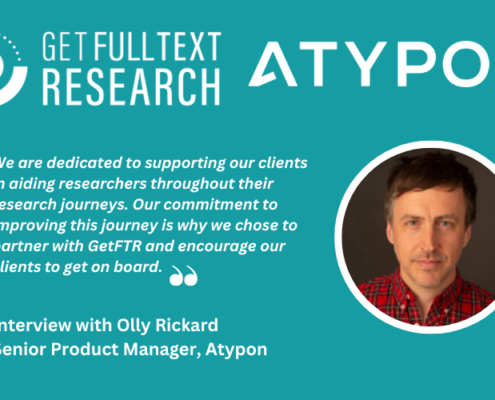 https://www.getfulltextresearch.com/wp-content/uploads/2024/08/Atypon800-x-500-px.png
500
800
Tracy Gardner
https://www.getfulltextresearch.com/wp-content/uploads/2023/01/getftr-colour-B.svg
Tracy Gardner2024-08-03 14:49:342024-08-03 14:59:59Interview with Olly Rickard, Atypon
https://www.getfulltextresearch.com/wp-content/uploads/2024/08/Atypon800-x-500-px.png
500
800
Tracy Gardner
https://www.getfulltextresearch.com/wp-content/uploads/2023/01/getftr-colour-B.svg
Tracy Gardner2024-08-03 14:49:342024-08-03 14:59:59Interview with Olly Rickard, Atypon https://www.getfulltextresearch.com/wp-content/uploads/2024/07/open-access-logo-png-transparent-e1720788975687.png
480
1200
Tracy Gardner
https://www.getfulltextresearch.com/wp-content/uploads/2023/01/getftr-colour-B.svg
Tracy Gardner2024-07-12 14:05:042024-07-31 14:55:49GetFTR Enhances Support for Open Access Publishers
https://www.getfulltextresearch.com/wp-content/uploads/2024/07/open-access-logo-png-transparent-e1720788975687.png
480
1200
Tracy Gardner
https://www.getfulltextresearch.com/wp-content/uploads/2023/01/getftr-colour-B.svg
Tracy Gardner2024-07-12 14:05:042024-07-31 14:55:49GetFTR Enhances Support for Open Access Publishers https://www.getfulltextresearch.com/wp-content/uploads/2024/06/Coveri-1536x1024-1-e1722434239514.png
533
800
Tracy Gardner
https://www.getfulltextresearch.com/wp-content/uploads/2023/01/getftr-colour-B.svg
Tracy Gardner2024-06-28 14:13:562026-06-16 16:42:06How R Discovery achieved increased engagement with GetFTR
https://www.getfulltextresearch.com/wp-content/uploads/2024/06/Coveri-1536x1024-1-e1722434239514.png
533
800
Tracy Gardner
https://www.getfulltextresearch.com/wp-content/uploads/2023/01/getftr-colour-B.svg
Tracy Gardner2024-06-28 14:13:562026-06-16 16:42:06How R Discovery achieved increased engagement with GetFTR https://www.getfulltextresearch.com/wp-content/uploads/2024/06/GetFTR-Case-studies-800-x-500-px.png
500
800
Tracy Gardner
https://www.getfulltextresearch.com/wp-content/uploads/2023/01/getftr-colour-B.svg
Tracy Gardner2024-06-24 15:36:242024-06-28 13:58:05Case Study: Thieme’s Integration with GetFTR
https://www.getfulltextresearch.com/wp-content/uploads/2024/06/GetFTR-Case-studies-800-x-500-px.png
500
800
Tracy Gardner
https://www.getfulltextresearch.com/wp-content/uploads/2023/01/getftr-colour-B.svg
Tracy Gardner2024-06-24 15:36:242024-06-28 13:58:05Case Study: Thieme’s Integration with GetFTR https://www.getfulltextresearch.com/wp-content/uploads/2024/06/Press-Release-tile.png
1200
1200
Tracy Gardner
https://www.getfulltextresearch.com/wp-content/uploads/2023/01/getftr-colour-B.svg
Tracy Gardner2024-06-13 10:44:462024-07-31 11:38:42GetFTR Extends Retraction and Errata Service to All Partners
https://www.getfulltextresearch.com/wp-content/uploads/2024/06/Press-Release-tile.png
1200
1200
Tracy Gardner
https://www.getfulltextresearch.com/wp-content/uploads/2023/01/getftr-colour-B.svg
Tracy Gardner2024-06-13 10:44:462024-07-31 11:38:42GetFTR Extends Retraction and Errata Service to All Partners https://www.getfulltextresearch.com/wp-content/uploads/2024/05/Crossref-2.png
1200
1200
Tracy Gardner
https://www.getfulltextresearch.com/wp-content/uploads/2023/01/getftr-colour-B.svg
Tracy Gardner2024-05-05 16:13:012024-07-31 14:39:53Press Release: GetFTR collaborates with Crossref to strengthen research integrity
https://www.getfulltextresearch.com/wp-content/uploads/2024/05/Crossref-2.png
1200
1200
Tracy Gardner
https://www.getfulltextresearch.com/wp-content/uploads/2023/01/getftr-colour-B.svg
Tracy Gardner2024-05-05 16:13:012024-07-31 14:39:53Press Release: GetFTR collaborates with Crossref to strengthen research integrity https://www.getfulltextresearch.com/wp-content/uploads/2024/04/DSC_3348-e1712232896900.jpg
533
800
Tracy Gardner
https://www.getfulltextresearch.com/wp-content/uploads/2023/01/getftr-colour-B.svg
Tracy Gardner2024-04-04 13:26:032024-04-04 14:21:29Tracy Gardner joins GetFTR as Head of Marketing
https://www.getfulltextresearch.com/wp-content/uploads/2023/01/new-partner-background.jpg
500
800
Tracy Gardner
https://www.getfulltextresearch.com/wp-content/uploads/2023/01/getftr-colour-B.svg
Tracy Gardner2024-02-29 13:15:062024-03-13 14:26:09Thieme go live and IOPP integrates GetFTR indicators with article references
https://www.getfulltextresearch.com/wp-content/uploads/2024/04/DSC_3348-e1712232896900.jpg
533
800
Tracy Gardner
https://www.getfulltextresearch.com/wp-content/uploads/2023/01/getftr-colour-B.svg
Tracy Gardner2024-04-04 13:26:032024-04-04 14:21:29Tracy Gardner joins GetFTR as Head of Marketing
https://www.getfulltextresearch.com/wp-content/uploads/2023/01/new-partner-background.jpg
500
800
Tracy Gardner
https://www.getfulltextresearch.com/wp-content/uploads/2023/01/getftr-colour-B.svg
Tracy Gardner2024-02-29 13:15:062024-03-13 14:26:09Thieme go live and IOPP integrates GetFTR indicators with article references https://www.getfulltextresearch.com/wp-content/uploads/2024/01/Open-Access-logo-e1706703125375.jpg
426
600
Tracy Gardner
https://www.getfulltextresearch.com/wp-content/uploads/2023/01/getftr-colour-B.svg
Tracy Gardner2024-01-31 11:59:312024-02-06 10:29:33GetFTR increases visibility of OA and Free articles
https://www.getfulltextresearch.com/wp-content/uploads/2023/01/new-partner-background.jpg
500
800
Simon Hicks
https://www.getfulltextresearch.com/wp-content/uploads/2023/01/getftr-colour-B.svg
Simon Hicks2023-12-08 11:17:022024-02-06 10:30:32ASM International, AACR and SciSummary latest to join GetFTR
https://www.getfulltextresearch.com/wp-content/uploads/2024/01/Open-Access-logo-e1706703125375.jpg
426
600
Tracy Gardner
https://www.getfulltextresearch.com/wp-content/uploads/2023/01/getftr-colour-B.svg
Tracy Gardner2024-01-31 11:59:312024-02-06 10:29:33GetFTR increases visibility of OA and Free articles
https://www.getfulltextresearch.com/wp-content/uploads/2023/01/new-partner-background.jpg
500
800
Simon Hicks
https://www.getfulltextresearch.com/wp-content/uploads/2023/01/getftr-colour-B.svg
Simon Hicks2023-12-08 11:17:022024-02-06 10:30:32ASM International, AACR and SciSummary latest to join GetFTR https://www.getfulltextresearch.com/wp-content/uploads/2023/11/1700554566212.jpeg
1200
1200
Tracy Gardner
https://www.getfulltextresearch.com/wp-content/uploads/2023/01/getftr-colour-B.svg
Tracy Gardner2023-11-20 14:50:272023-11-22 21:23:28American Chemical Society (ACS) Enhances Researcher Experience with Integration of GetFTR into Article References
https://www.getfulltextresearch.com/wp-content/uploads/2023/01/new-partner-background.jpg
500
800
Tracy Gardner
https://www.getfulltextresearch.com/wp-content/uploads/2023/01/getftr-colour-B.svg
Tracy Gardner2023-10-10 09:48:112023-10-10 10:35:13CABI, Edward Elgar & Royal College of Surgeons of England take advantage of GetFTR’s “free tier” initiative.
https://www.getfulltextresearch.com/wp-content/uploads/2023/01/new-partner-background.jpg
500
800
Tracy Gardner
https://www.getfulltextresearch.com/wp-content/uploads/2023/01/getftr-colour-B.svg
Tracy Gardner2023-07-06 09:27:502023-07-06 12:16:11Sage becomes latest publisher to join GetFTR
https://www.getfulltextresearch.com/wp-content/uploads/2023/01/new-partner-background.jpg
500
800
Tracy Gardner
https://www.getfulltextresearch.com/wp-content/uploads/2023/01/getftr-colour-B.svg
Tracy Gardner2023-06-12 11:41:112023-06-14 11:55:08Oxford University Press and Geological Society of London go live with GetFTR
https://www.getfulltextresearch.com/wp-content/uploads/2023/11/1700554566212.jpeg
1200
1200
Tracy Gardner
https://www.getfulltextresearch.com/wp-content/uploads/2023/01/getftr-colour-B.svg
Tracy Gardner2023-11-20 14:50:272023-11-22 21:23:28American Chemical Society (ACS) Enhances Researcher Experience with Integration of GetFTR into Article References
https://www.getfulltextresearch.com/wp-content/uploads/2023/01/new-partner-background.jpg
500
800
Tracy Gardner
https://www.getfulltextresearch.com/wp-content/uploads/2023/01/getftr-colour-B.svg
Tracy Gardner2023-10-10 09:48:112023-10-10 10:35:13CABI, Edward Elgar & Royal College of Surgeons of England take advantage of GetFTR’s “free tier” initiative.
https://www.getfulltextresearch.com/wp-content/uploads/2023/01/new-partner-background.jpg
500
800
Tracy Gardner
https://www.getfulltextresearch.com/wp-content/uploads/2023/01/getftr-colour-B.svg
Tracy Gardner2023-07-06 09:27:502023-07-06 12:16:11Sage becomes latest publisher to join GetFTR
https://www.getfulltextresearch.com/wp-content/uploads/2023/01/new-partner-background.jpg
500
800
Tracy Gardner
https://www.getfulltextresearch.com/wp-content/uploads/2023/01/getftr-colour-B.svg
Tracy Gardner2023-06-12 11:41:112023-06-14 11:55:08Oxford University Press and Geological Society of London go live with GetFTR https://www.getfulltextresearch.com/wp-content/uploads/2023/05/researchgate.jpg
500
800
Tracy Gardner
https://www.getfulltextresearch.com/wp-content/uploads/2023/01/getftr-colour-B.svg
Tracy Gardner2023-05-18 12:11:542023-05-24 09:55:07ResearchGate integrates with GetFTR
https://www.getfulltextresearch.com/wp-content/uploads/2023/01/new-partner-background.jpg
500
800
Simon Hicks
https://www.getfulltextresearch.com/wp-content/uploads/2023/01/getftr-colour-B.svg
Simon Hicks2023-01-20 15:19:512023-02-10 17:42:51GetFTR welcomes American Meteorological Society and KGL PubFactory as new partners for 2023
https://www.getfulltextresearch.com/wp-content/uploads/2023/01/new-partner-background.jpg
500
800
Simon Hicks
https://www.getfulltextresearch.com/wp-content/uploads/2023/01/getftr-colour-B.svg
Simon Hicks2022-12-15 17:40:062023-02-10 17:44:09American Diabetes Association and American Physiological Society join GetFTR as publishing partners
https://www.getfulltextresearch.com/wp-content/uploads/2023/01/new-partner-background.jpg
500
800
Simon Hicks
https://www.getfulltextresearch.com/wp-content/uploads/2023/01/getftr-colour-B.svg
Simon Hicks2022-10-05 14:29:352023-02-10 17:44:41GetFTR welcomes two new publishers to a new program that waives costs for smaller organisations
https://www.getfulltextresearch.com/wp-content/uploads/2023/01/new-partner-background.jpg
500
800
Simon Hicks
https://www.getfulltextresearch.com/wp-content/uploads/2023/01/getftr-colour-B.svg
Simon Hicks2022-01-07 23:39:532023-03-22 23:41:21APA PsycInfo and R Discovery, CACTUS join GetFTR
https://www.getfulltextresearch.com/wp-content/uploads/2023/01/new-partner-background.jpg
500
800
Simon Hicks
https://www.getfulltextresearch.com/wp-content/uploads/2023/01/getftr-colour-B.svg
Simon Hicks2021-11-17 00:04:502023-03-23 00:05:40MyScienceWork partners with GetFTR: a new streamlined direction towards content
https://www.getfulltextresearch.com/wp-content/uploads/2024/06/Press-Release-tile.png
1200
1200
Simon Hicks
https://www.getfulltextresearch.com/wp-content/uploads/2023/01/getftr-colour-B.svg
Simon Hicks2021-11-09 00:13:442026-10-07 14:11:48Breaking down access barriers – Join GetFTR, SeamlessAccess and CONNECT
https://www.getfulltextresearch.com/wp-content/uploads/2023/01/new-partner-background.jpg
500
800
Simon Hicks
https://www.getfulltextresearch.com/wp-content/uploads/2023/01/getftr-colour-B.svg
Simon Hicks2021-09-15 00:27:172023-03-23 00:28:20Silverchair partners American Medical Association and Rockefeller University Press join GetFTR
https://www.getfulltextresearch.com/wp-content/uploads/2023/01/new-partner-background.jpg
500
800
Simon Hicks
https://www.getfulltextresearch.com/wp-content/uploads/2023/01/getftr-colour-B.svg
Simon Hicks2021-07-29 00:31:582023-03-23 00:32:41Leading non-profit physical sciences publisher, AIP Publishing joins GetFTR
https://www.getfulltextresearch.com/wp-content/uploads/2023/01/new-partner-background.jpg
500
800
Simon Hicks
https://www.getfulltextresearch.com/wp-content/uploads/2023/01/getftr-colour-B.svg
Simon Hicks2021-05-18 00:41:232023-03-23 00:42:21Leading independent platform partner, Silverchair, joins GetFTR
https://www.getfulltextresearch.com/wp-content/uploads/2023/01/new-partner-background.jpg
500
800
Simon Hicks
https://www.getfulltextresearch.com/wp-content/uploads/2023/01/getftr-colour-B.svg
Simon Hicks2021-04-19 13:53:302023-04-17 17:40:54Future Science Group goes live with GetFTR
https://www.getfulltextresearch.com/wp-content/uploads/2023/01/new-partner-background.jpg
500
800
Simon Hicks
https://www.getfulltextresearch.com/wp-content/uploads/2023/01/getftr-colour-B.svg
Simon Hicks2020-12-10 14:40:112023-03-23 14:41:25Publisher the American Society of Civil Engineers and integrator Semantic Scholar are to join GetFTR
https://www.getfulltextresearch.com/wp-content/uploads/2023/01/new-partner-background.jpg
500
800
Simon Hicks
https://www.getfulltextresearch.com/wp-content/uploads/2023/01/getftr-colour-B.svg
Simon Hicks2020-12-03 14:51:432023-04-17 17:46:56CHORUS now using GetFTR to support open research compliance for publicly funded research
https://www.getfulltextresearch.com/wp-content/uploads/2023/01/new-partner-background.jpg
500
800
Simon Hicks
https://www.getfulltextresearch.com/wp-content/uploads/2023/01/getftr-colour-B.svg
Simon Hicks2020-09-02 16:08:112023-03-23 16:08:50Karger Publishers trials GetFTR
https://www.getfulltextresearch.com/wp-content/uploads/2023/05/researchgate.jpg
500
800
Tracy Gardner
https://www.getfulltextresearch.com/wp-content/uploads/2023/01/getftr-colour-B.svg
Tracy Gardner2023-05-18 12:11:542023-05-24 09:55:07ResearchGate integrates with GetFTR
https://www.getfulltextresearch.com/wp-content/uploads/2023/01/new-partner-background.jpg
500
800
Simon Hicks
https://www.getfulltextresearch.com/wp-content/uploads/2023/01/getftr-colour-B.svg
Simon Hicks2023-01-20 15:19:512023-02-10 17:42:51GetFTR welcomes American Meteorological Society and KGL PubFactory as new partners for 2023
https://www.getfulltextresearch.com/wp-content/uploads/2023/01/new-partner-background.jpg
500
800
Simon Hicks
https://www.getfulltextresearch.com/wp-content/uploads/2023/01/getftr-colour-B.svg
Simon Hicks2022-12-15 17:40:062023-02-10 17:44:09American Diabetes Association and American Physiological Society join GetFTR as publishing partners
https://www.getfulltextresearch.com/wp-content/uploads/2023/01/new-partner-background.jpg
500
800
Simon Hicks
https://www.getfulltextresearch.com/wp-content/uploads/2023/01/getftr-colour-B.svg
Simon Hicks2022-10-05 14:29:352023-02-10 17:44:41GetFTR welcomes two new publishers to a new program that waives costs for smaller organisations
https://www.getfulltextresearch.com/wp-content/uploads/2023/01/new-partner-background.jpg
500
800
Simon Hicks
https://www.getfulltextresearch.com/wp-content/uploads/2023/01/getftr-colour-B.svg
Simon Hicks2022-01-07 23:39:532023-03-22 23:41:21APA PsycInfo and R Discovery, CACTUS join GetFTR
https://www.getfulltextresearch.com/wp-content/uploads/2023/01/new-partner-background.jpg
500
800
Simon Hicks
https://www.getfulltextresearch.com/wp-content/uploads/2023/01/getftr-colour-B.svg
Simon Hicks2021-11-17 00:04:502023-03-23 00:05:40MyScienceWork partners with GetFTR: a new streamlined direction towards content
https://www.getfulltextresearch.com/wp-content/uploads/2024/06/Press-Release-tile.png
1200
1200
Simon Hicks
https://www.getfulltextresearch.com/wp-content/uploads/2023/01/getftr-colour-B.svg
Simon Hicks2021-11-09 00:13:442026-10-07 14:11:48Breaking down access barriers – Join GetFTR, SeamlessAccess and CONNECT
https://www.getfulltextresearch.com/wp-content/uploads/2023/01/new-partner-background.jpg
500
800
Simon Hicks
https://www.getfulltextresearch.com/wp-content/uploads/2023/01/getftr-colour-B.svg
Simon Hicks2021-09-15 00:27:172023-03-23 00:28:20Silverchair partners American Medical Association and Rockefeller University Press join GetFTR
https://www.getfulltextresearch.com/wp-content/uploads/2023/01/new-partner-background.jpg
500
800
Simon Hicks
https://www.getfulltextresearch.com/wp-content/uploads/2023/01/getftr-colour-B.svg
Simon Hicks2021-07-29 00:31:582023-03-23 00:32:41Leading non-profit physical sciences publisher, AIP Publishing joins GetFTR
https://www.getfulltextresearch.com/wp-content/uploads/2023/01/new-partner-background.jpg
500
800
Simon Hicks
https://www.getfulltextresearch.com/wp-content/uploads/2023/01/getftr-colour-B.svg
Simon Hicks2021-05-18 00:41:232023-03-23 00:42:21Leading independent platform partner, Silverchair, joins GetFTR
https://www.getfulltextresearch.com/wp-content/uploads/2023/01/new-partner-background.jpg
500
800
Simon Hicks
https://www.getfulltextresearch.com/wp-content/uploads/2023/01/getftr-colour-B.svg
Simon Hicks2021-04-19 13:53:302023-04-17 17:40:54Future Science Group goes live with GetFTR
https://www.getfulltextresearch.com/wp-content/uploads/2023/01/new-partner-background.jpg
500
800
Simon Hicks
https://www.getfulltextresearch.com/wp-content/uploads/2023/01/getftr-colour-B.svg
Simon Hicks2020-12-10 14:40:112023-03-23 14:41:25Publisher the American Society of Civil Engineers and integrator Semantic Scholar are to join GetFTR
https://www.getfulltextresearch.com/wp-content/uploads/2023/01/new-partner-background.jpg
500
800
Simon Hicks
https://www.getfulltextresearch.com/wp-content/uploads/2023/01/getftr-colour-B.svg
Simon Hicks2020-12-03 14:51:432023-04-17 17:46:56CHORUS now using GetFTR to support open research compliance for publicly funded research
https://www.getfulltextresearch.com/wp-content/uploads/2023/01/new-partner-background.jpg
500
800
Simon Hicks
https://www.getfulltextresearch.com/wp-content/uploads/2023/01/getftr-colour-B.svg
Simon Hicks2020-09-02 16:08:112023-03-23 16:08:50Karger Publishers trials GetFTR

